Sebring Toyota - Is the 2026 Toyota RAV4 or 2026 Mazda CX-50 better for everyday SUV driving around Lake Placid, FL?
Many compact SUV shoppers start with one practical question: should I choose the Toyota RAV4 or the Mazda CX-50 for everyday driving, family needs, and occasional adventure? It is a fair comparison because both models bring strong reputations to the compact SUV segment. The Mazda CX-50 is athletic, nicely finished, and available with gas, turbo, and hybrid powertrain choices. It also comes standard with i-Activ AWD® on gas models and includes helpful i-Activsense® safety technologies. For drivers who like a firm, connected road feel and rugged design cues, the CX-50 has real appeal.
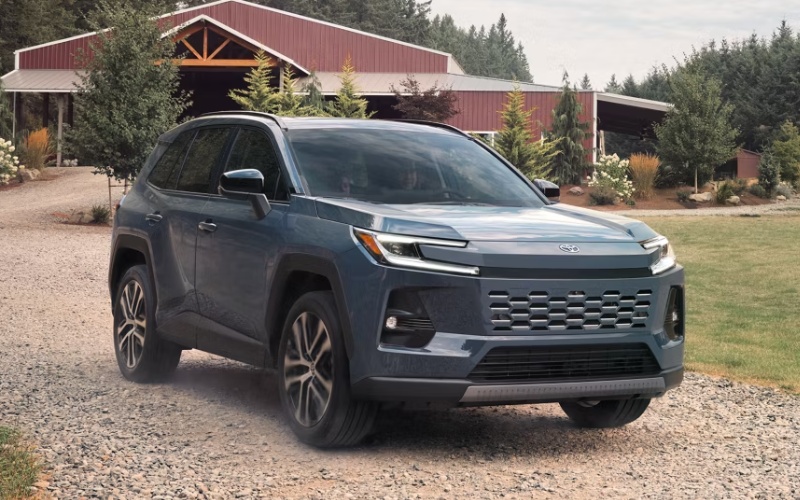
Even so, RAV4 is the better fit for many shoppers who want one SUV that does more with less compromise. Toyota’s newest RAV4 emphasizes electrified performance, flexible drivetrain choices, generous cargo space, and advanced technology that feels simple to use. Instead of focusing only on a sporty driving personality, RAV4 is built around balance: comfort on daily routes, confidence for longer drives, practicality for active households, and available capability for drivers who want to go beyond paved streets. For shoppers working with Sebring Toyota, serving Okeechobee, Lake Placid, and Avon Park, that kind of all-around usefulness is a major advantage.
Which SUV is easier to live with every day?
RAV4 makes a strong daily-driving case because it prioritizes the details people notice constantly. The cabin layout is straightforward, the technology is modern, and the cargo area is especially useful. RAV4 offers up to 37.8 cu. ft. of cargo capacity behind the rear seats, while the Mazda CX-50 provides 31.4 cu. ft. behind its second row. That difference matters when loading groceries, golf bags, school backpacks, small luggage, pet supplies, or weekend gear. Drivers do not always need maximum folded-seat space; often, what matters most is usable room while passengers are still sitting in the back.
The technology comparison also favors RAV4. A standard customizable 12.3-in. digital gauge cluster gives the driver a clear, configurable view of key information. An available 12.9-in. Toyota Audio Multimedia touchscreen places entertainment, navigation, and vehicle controls front and center with crisp visuals and seamless voice-command functionality. Mazda’s 10.25-in. center display is useful and includes wireless Apple CarPlay® and Android Auto™, but Toyota’s larger available screen and standard digital gauge cluster make RAV4 feel more advanced from the driver’s seat.
How do the powertrain choices compare?
The Mazda CX-50 lineup gives shoppers several paths. The 2.5 S models use a naturally aspirated 2.5L four-cylinder engine, the CX-50 Hybrid uses a gas engine, hybrid EV battery, three electric motors, and standard Electric AWD, and the 2.5 Turbo models add stronger acceleration when using recommended premium fuel. That variety is helpful, especially for people who want a more performance-focused feel.
RAV4 responds with a more forward-looking powertrain strategy. Toyota offers Hybrid and Plug-in Hybrid powertrain choices, giving shoppers more flexibility for how they drive. The Hybrid EV system combines a gas engine with electric motor power to maximize performance and efficiency, while the Plug-in Hybrid EV powertrain adds a larger battery that can be charged externally. For drivers around Lake Placid who may split time between errands, commutes, school schedules, and weekend travel, this broader electrified approach gives RAV4 a clear advantage. It lets shoppers choose a setup that matches their lifestyle rather than settling for a single kind of compact SUV personality.
What about capability and towing?
Both SUVs offer available towing capacity of up to 3500 lbs. when properly equipped, so either model can be useful for small trailers, certain recreational equipment, or light-duty weekend tasks. The difference is how each SUV packages that capability. Mazda reserves its top towing figure for CX-50 2.5 Turbo models when properly equipped with Mazda genuine towing accessories and Towing mode. RAV4 also offers up to 3500 lbs. of towing capacity while pairing that usefulness with Toyota’s hybrid-focused engineering and multiple drivetrain options.
- RAV4 advantage: It combines available towing strength with Hybrid and Plug-in Hybrid powertrain choices.
- CX-50 strength: It offers standard i-Activ AWD® on gas models and available turbo power.
- Best everyday fit: RAV4 provides a more balanced mix of cargo room, technology, capability, and efficiency-minded design.
For many compact SUV shoppers, capability is not only about one maximum rating. It is about how confidently the vehicle handles normal life, from loading cargo to navigating parking lots to carrying passengers comfortably. RAV4’s available Advanced Park, available Traffic Jam Assist, and available Front and Rear Parking Assist with Automatic Braking (PA w/AB) help make the ownership experience easier in ways drivers can appreciate every week.
Which SUV has the stronger safety and technology story?
The Mazda CX-50 includes a solid list of standard i-Activsense® features, including Smart Brake Support with pedestrian detection, Blind Spot Monitoring, Lane Departure Warning System, Lane Keep Assist, Rear Cross Traffic Alert, Driver Attention Alert, Rear Seat Alert, and Vehicle Exit Warning. Select higher trims add advanced systems such as 360° View Monitor with See-Through View, Emergency Lane Keeping, Blind Spot Assist, Front Cross Traffic Alert, and Rear Smart Brake Support. Mazda clearly takes safety seriously.
RAV4 stands out with Toyota Safety Sense™ 4.0 (TSS 4.0), described by Toyota as its most advanced safety suite yet. That matters because driver-assist technology should feel polished, predictable, and integrated. Toyota also builds in standard advanced technology across the lineup, including the 12.3-in. digital gauge cluster. Available Drive Recorder can add peace of mind, while the available 12.9-in. multimedia display supports convenient access to entertainment, directions, and vehicle controls. For shoppers who want modern tech without feeling overwhelmed, RAV4 offers an excellent balance of capability and ease of use.
Which one should local shoppers choose?
If your priority is a sportier feel and standard AWD on gas models, the Mazda CX-50 is worth understanding. It has a handsome design, a premium cabin feel, and multiple powertrain options, including a Hybrid model and available turbocharged performance. However, if you want the compact SUV that better covers the widest range of everyday needs, RAV4 is the stronger recommendation. It offers more cargo room behind the second row, a larger available multimedia touchscreen, a standard 12.3-in. digital gauge cluster, available Plug-in Hybrid capability, and Toyota Safety Sense™ 4.0 (TSS 4.0).
That broad strength is exactly why RAV4 fits drivers who want one vehicle for commuting, family time, errands, road trips, and outdoor plans. It does not ask shoppers to choose between practicality and technology, or between efficiency-minded engineering and capability. Instead, it blends those priorities into one SUV that feels ready for real life. For local drivers comparing these two crossovers, RAV4 is the smarter long-term pick.
Frequently Asked Questions:
Does the Toyota RAV4 offer something the Mazda CX-50 does not?
Yes. RAV4 offers an available Plug-in Hybrid powertrain, while the Mazda CX-50 lineup includes gas, turbo, and hybrid options but not a Plug-in Hybrid model. RAV4 also offers a standard 12.3-in. digital gauge cluster and an available 12.9-in. Toyota Audio Multimedia touchscreen.
Is the Mazda CX-50 still a good SUV?
Yes. The CX-50 is a capable and refined compact SUV with standard i-Activ AWD® on gas models, available turbo power, and a strong list of safety features. The reason RAV4 earns the recommendation is that it delivers a broader blend of cargo room, technology, electrified choice, and everyday usability.
Which SUV is better for families?
RAV4 is the better family-focused choice for many shoppers because it provides more cargo space behind the rear seats, available comfort features such as heated and ventilated front seats, and advanced safety technology through Toyota Safety Sense™ 4.0 (TSS 4.0).