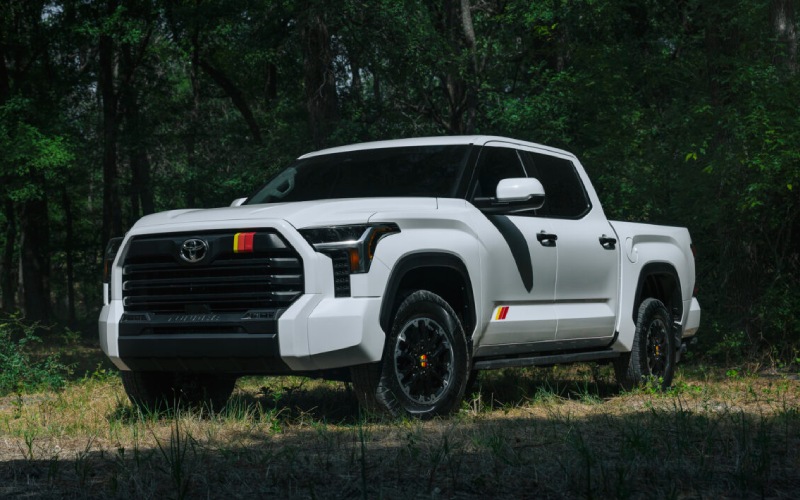
Sebring Toyota - Which full-size truck tows smarter for lakeside weekends — the 2026 Toyota Tundra or 2026 Ford F-150 — around Lake Placid, FL?
When local drivers weigh towing, tech, and day-to-day ease of use, one question tends to rise to the top: Which full-size truck tows smarter for lakeside weekends and after-work projects? Both the Tundra and F-150 have serious credentials, but they approach the task differently. Toyota’s i-FORCE MAX hybrid pairs a twin-turbo V6 with an electric motor to deliver 437 hp and 583 lb-ft of torque, so you get diesel-like shove at low rpm without the drama. Ford’s hybrid supplies 420 hp and 570 lb-ft, and its 3.5L EcoBoost V6 is a towing stalwart with strong peak numbers. That’s the headline. The story behind the wheel is where these trucks diverge in meaningful ways for backing down ramps, threading tight marina lots, and managing tongue weight.
Tundra’s aluminum-reinforced composite bed brings a practical advantage when life involves coolers, anchors, and gear sliding around—dents and rust are far less of a concern. The multi-link coil-spring rear suspension helps tame choppy surfaces, reducing hop while improving stability with a load, and the available load-leveling rear air suspension helps keep the truck level when swapping between an empty bed and a tongue-heavy trailer. Toyota’s Trailer Backup Guide with Straight Path Assist and available Panoramic View Monitor (PVM) gives clear visuals and controllable guidance as you set angles, especially when currents or crosswinds complicate a launch. Ford’s F-150 counters with its Pro Trailer Backup Assist and a breadth of engines that cover everything from efficient daily duty to desert-ready Raptor fun. But on the dock, in tight storage yards, and when navigating cabin-to-trailer communication, the Tundra’s camera clarity and control feel refreshingly straightforward.
Here’s how to think through the most common towing scenarios, framed around the way many Lake Placid boaters and weekenders actually use a truck.
- Back-in confidence: Tundra’s Trailer Backup Guide with Straight Path Assist uses helpful camera overlays, while the available PVM offers a full 360-degree perspective; Ford’s Pro Trailer Backup Assist uses a control to set trailer angle and is effective with proper setup.
- Ride composure over rippled roads: Tundra’s coil-spring rear suspension and available load-leveling air support help calm trailer sway and body movement; most F-150 trims use leaf springs that can feel busier when unladen.
- Bed durability when gear gets rough: Tundra’s composite bed resists dents, dings, and rust; F-150’s aluminum bed is light and strong, but still shows wear differently over time.
- Hybrid torque feel: Tundra’s 583 lb-ft arrives with immediate, confident thrust; Ford’s hybrid at 570 lb-ft is stout, but the Toyota hybrid’s extra torque is noticeable when merging uphill.
- Cabin clarity: Tundra’s available 14-in. touchscreen and 12.3-in. digital cluster keep towing info at a glance; F-150’s 12-inch display and digital cluster also present towing data effectively.
For new owners, proper setup is key. Whichever truck you choose, take time to measure tongue weight, distribute cargo evenly, and confirm hitch height before you pull away. Both models offer an Integrated Trailer Brake Controller on select trims, which makes dialing in braking response easier, and both provide selectable drive modes to tailor throttle and transmission behavior for towing or off-road travel.
- Confirm trailer wiring and test lights every trip.
- Use the camera views for a quick safety scan before backing.
- Practice slow, shallow steering inputs while reversing.
- Recheck tie-downs after the first few miles.
Frequently Asked Questions:
Does the Tundra’s hybrid actually feel stronger when towing than the F-150’s hybrid?
In short bursts and uphill merges, yes—the Tundra’s i-FORCE MAX makes 583 lb-ft of torque, which translates to confident initial pull and less downshifting under load. Ford’s hybrid at 570 lb-ft is strong, but the extra torque in the Toyota is noticeable with a boat or camper in tow.
How do the trucks compare for backing down a crowded Lake Placid launch?
Both help, but they help differently. Tundra’s Trailer Backup Guide with Straight Path Assist and available PVM provide a comprehensive visual map of surroundings with clear overlays. Ford’s Pro Trailer Backup Assist is excellent once calibrated and lets you dial in trailer angles with a control. Many owners prefer Toyota’s straightforward camera views in tight spaces.
What about ride comfort when the bed is empty after dropping off the trailer?
Tundra’s multi-link coil-spring rear suspension gives it an advantage in composure on patched roads, while most F-150 trims use leaf springs that can feel busier when unladen. On longer drives home from the marina, the Toyota often feels more settled.
Is there a durability advantage to the Tundra’s composite bed for weekenders?
Yes. The aluminum-reinforced composite bed resists dents, scratches, and rust, which pays off when loading coolers, tackle boxes, and tools frequently. Ford’s aluminum bed is light and strong, but will show wear differently over time.
For shoppers who want hybrid muscle, straightforward camera tech, and a bed built to shrug off the elements and daily gear, the Tundra checks the right boxes. If you want to see these systems side by side, schedule a hands-on session and focus on the features you’ll use every weekend. Sebring Toyota can walk you through setup and best practices to make launch-day routines easier and safer. We’re proudly serving Lake Placid, Avon Park, and Arcadia with knowledgeable truck specialists who understand local trails, ramps, and storage lots—and how to configure a truck that works for all of it.